
Repair/Preservation of Exterior Wooden Architectural Features on the Close House (2024-25)
This project was generously supported by the State Historical Society of Iowa’s Historical Resource Development Program and by Shive-Hattery Architecture and Engineering.
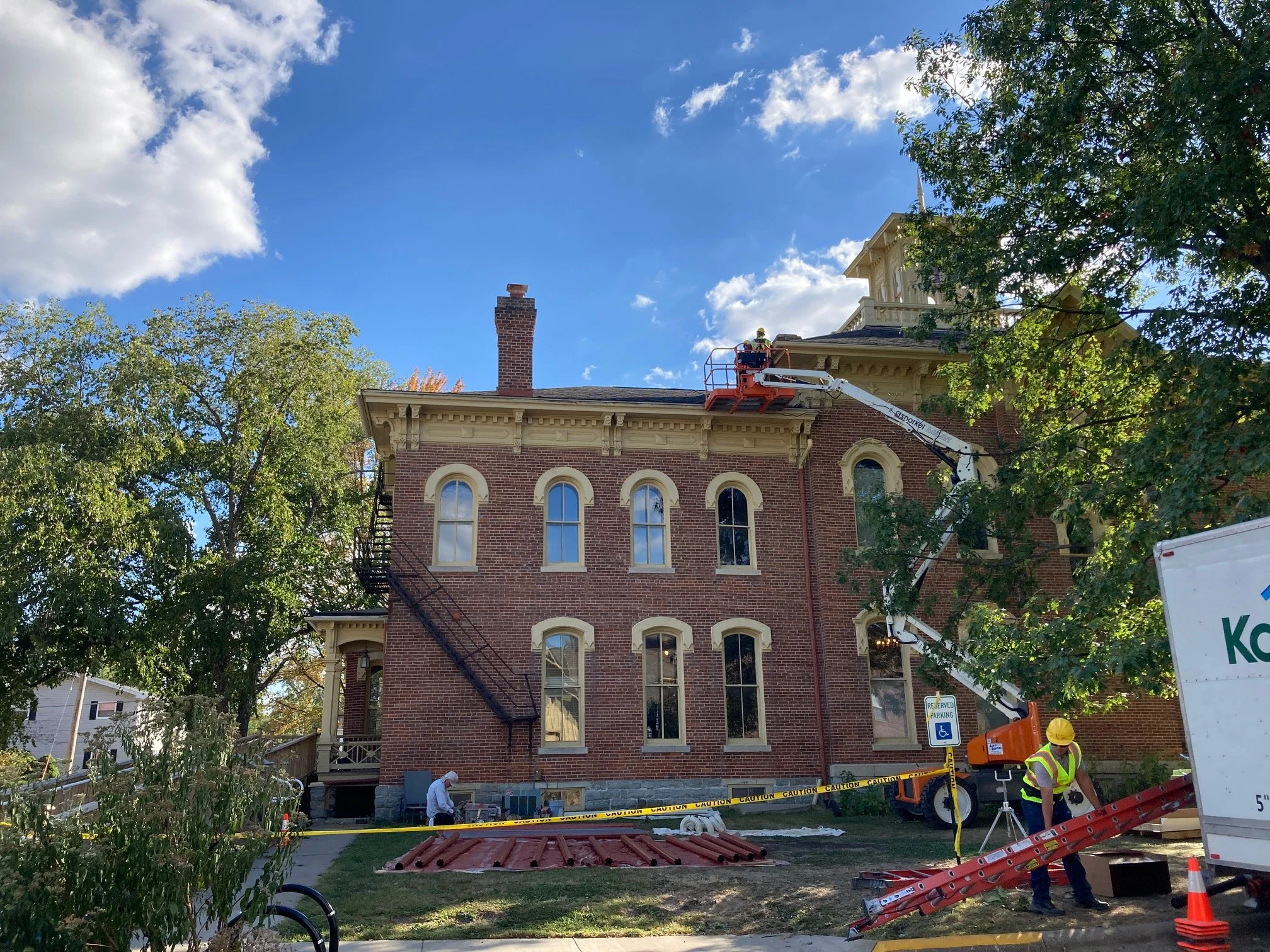
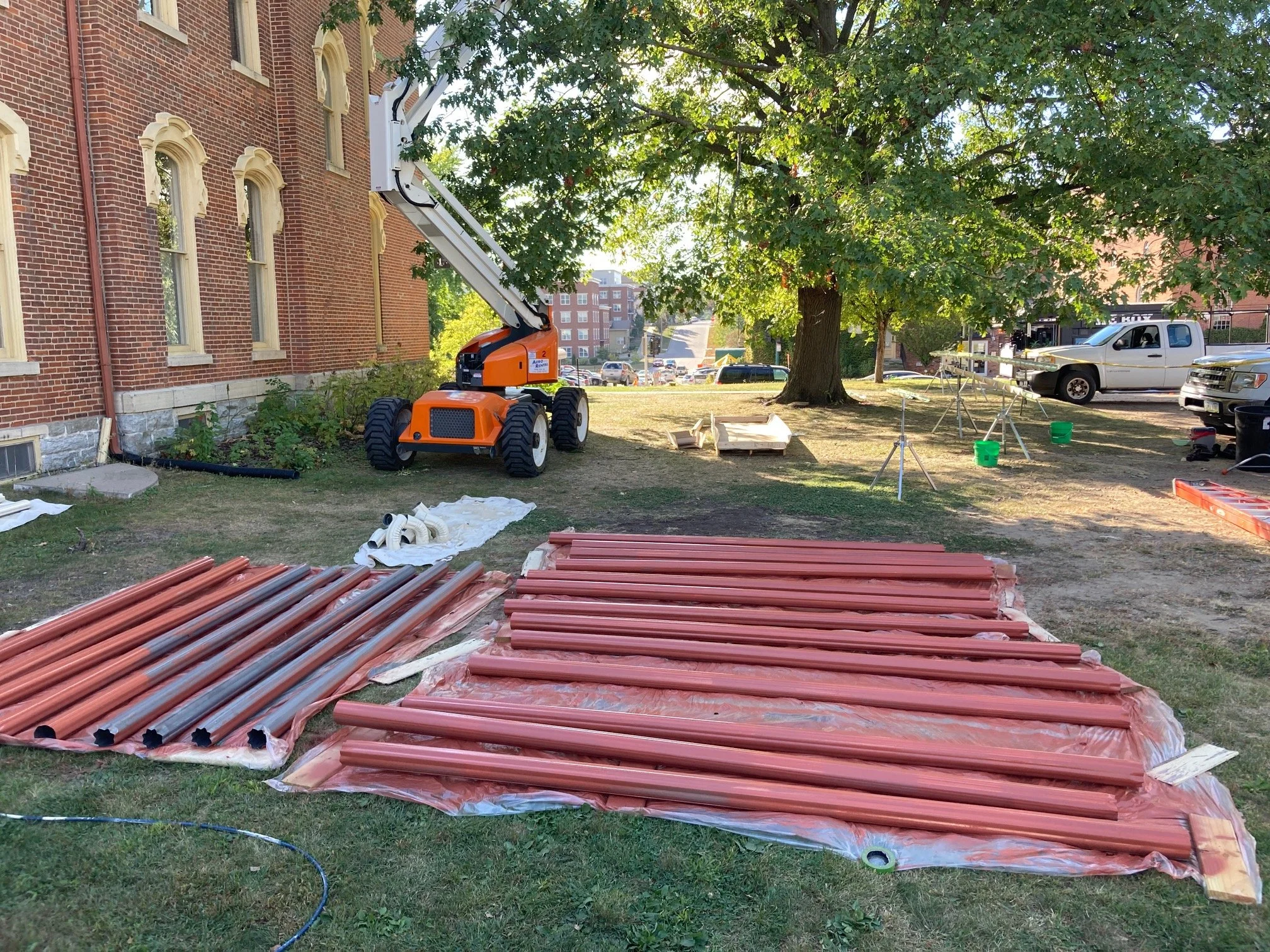
One core value of Public Space One is to create access to resources and art experiences that benefit the community in their daily lives. This value extends to learning about the practice of caretaking for our physical campus, which houses studios, libraries, galleries, community workshops and performance spaces. Part of PS1’s work in executing these repair projects involves disseminating lessons from our own process of taking care of this historic property.
An important step in our learning process has been to find financial support for paying laborers, talking with expert consultants, and buying repair materials and paints to protect the building we have come to know and love as the Close House. Thanks to a grant opportunity from the Historic Resources Development Program, we were able to take the time to ask big questions, hold planning conversations and work with amazing experts in Iowa including Shive Hattery, RDG Design, Friends of Historic Preservation, Iowa City Historic Preservation Commission members, RDG Planning and Design, Catch Em’ Critters, Andino Construction, Tomlinson Cannon and Kalona Gutters.
Through our experiences with these groups in the past two years, we’ve come out knowing a lot more about how rainwater interacts with our building’s structure, as well as how our building fits into the ecosystem on this corner, both as a neighbor, and even as former habitat for other creatures, including a number of squirrels, sparrows and bats. It turns out that all three had made their homes in the eaves of our roof and attic crawl spaces. All this to say, we learned a lot and still have a lot to learn. This small report is a way for us to tell the story about what we discovered along our journey in hopes that it offers relevant info to you in your own experiences with a historic structure, and maybe even gives you some courage to pursue some curiosities and repairs of your own.
More about the building
We are occupying a brick building that presents a unique amount of well-preserved, wooden decorative elements along the eaves, porches and false balconies. (Yes, many of our balconies are for looks – three of the four railed platforms are only accessible through windows, which technically means they aren’t accessible at all.)
The style of this building is Italianate. You can recognize this style by its ornate cornices, corbels, and wide overhanging eves. This style was popularized in the Midwest in the mid-19th century. Our building was built in 1874, designed by architect August Hazelhorst on behalf of an early industrialist Chalmer D. Close. The Close House is listed on the National Register of Historic Places. If you’re interested in learning more about this period of architectural design, there are a number of great source books, some maybe even written by your neighbors, on the non-fiction shelves of the Iowa City Public Library.
More about the issues to led us to seek funding support
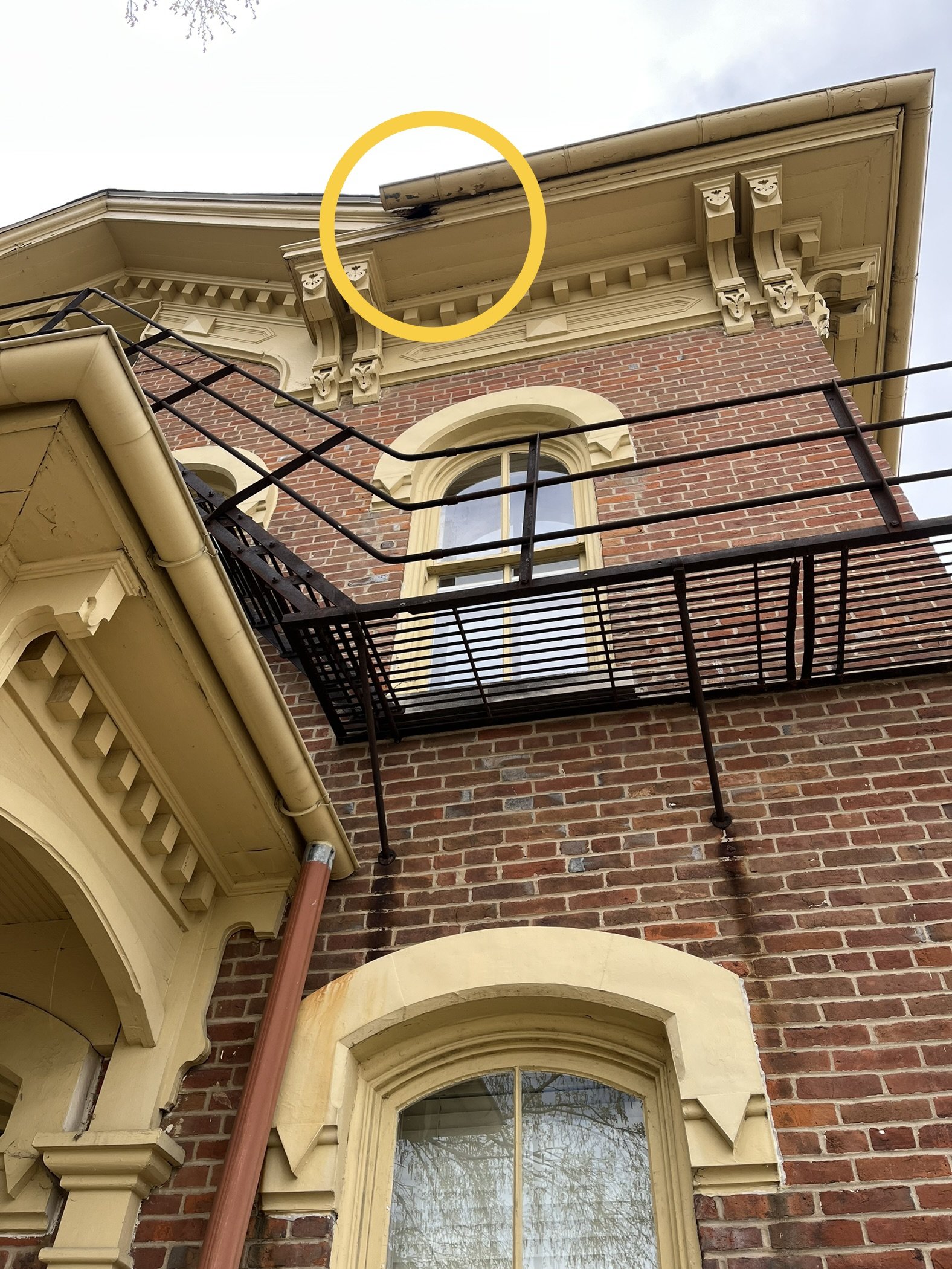
As we were moving into the Close House, we noticed some other elements and critters were moving in too, namely bats, birds, squirrels, and rainwater. The squirrels, birds, and bats all worked to widen existing openings in the softer, more porous building materials like the decorative wood elements surrounding our eaves and entryways.
It often takes some small openings in the first space for the critters I’ve just named to feel a space is inviting. Small openings around older homes are often formed by the persistence of moisture soaking, freezing/swelling in wooden elements through seasonal changes, as well as eventual rot. This moisture can persist through poor drainage due to flat spots in a roof, missing flashing, flaking paint, damaged gutters, and more.
Where we began and sought out advice
We first reached out to experts near Iowa City, people like our then-facilities manager Rich Dana, the core PS1 team, the Historic Preservation Commission, consultants with Shive Hattery, and a range of folks who have been involved in advocacy groups like the Friends of Historic Preservation.
When we learned about a grant opportunity through the Historical Resource Development Program, it enabled us to focus our efforts to describe our issues and call on more formal review of where the greatest risks were to the longevity of the building. In the grant writing process, we were able to pinpoint standing water at the very top of the building, around the railing of the cupola as a source of some of the issues, as well squirrel and bird nests collecting moisture around the eaves, and damaged and rusting gutters causing persistent leaks down the face of our building and onto the wooden railings and porches which were also losing paint.
Additionally, by having the expertise of Shive Hattery and hosting representatives from the Historic Preservation Commission, we were able to identify other long-term issues that we should continue to keep our eye out for and repair as soon as we can find the funds. We learned a lot about what stewardship of this building involves – and that it’s really an ongoing relationship, wherein we tend to areas with deferred maintenance, remain attentive and responsive to how the building reacts to weather, and keep our observations keen for areas where preventative work can take place.
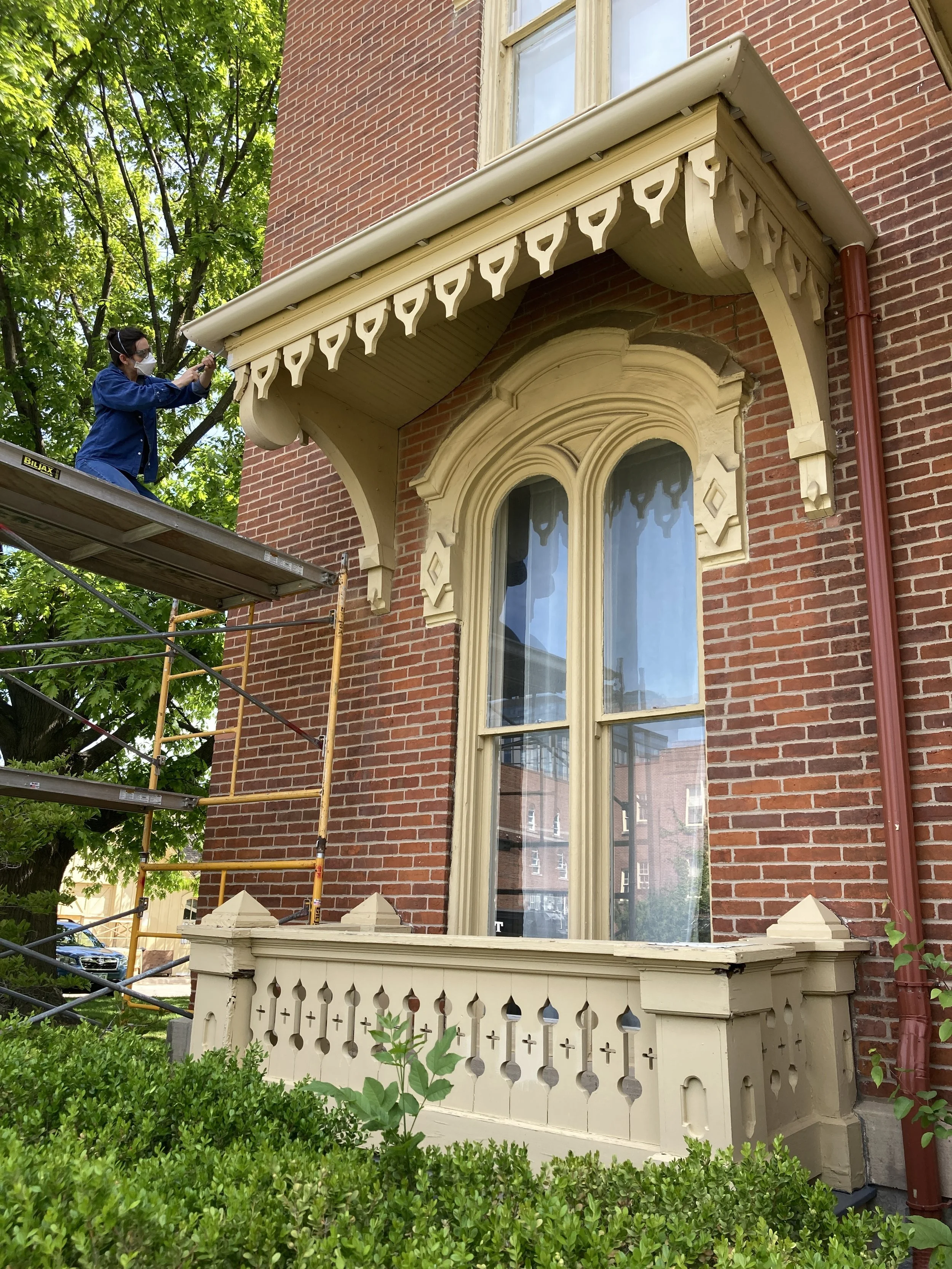
Once we had grant funding and approval for our proposed repairs from the Historic Preservation Commission, we began the repair work in earnest. Some of the interesting things we found along the way were evidence of past repairs. From the ground, the details may be hard to see, but once we were right up on the details on the third floor, it made it possible to find signs of generations of handy work that have gone into maintaining these wooden elements, signs like a slight change in paint hue, seams where new wood was patched into old wood, different ages of caulking, and even layers of new trim concealing details of older decorative elements.
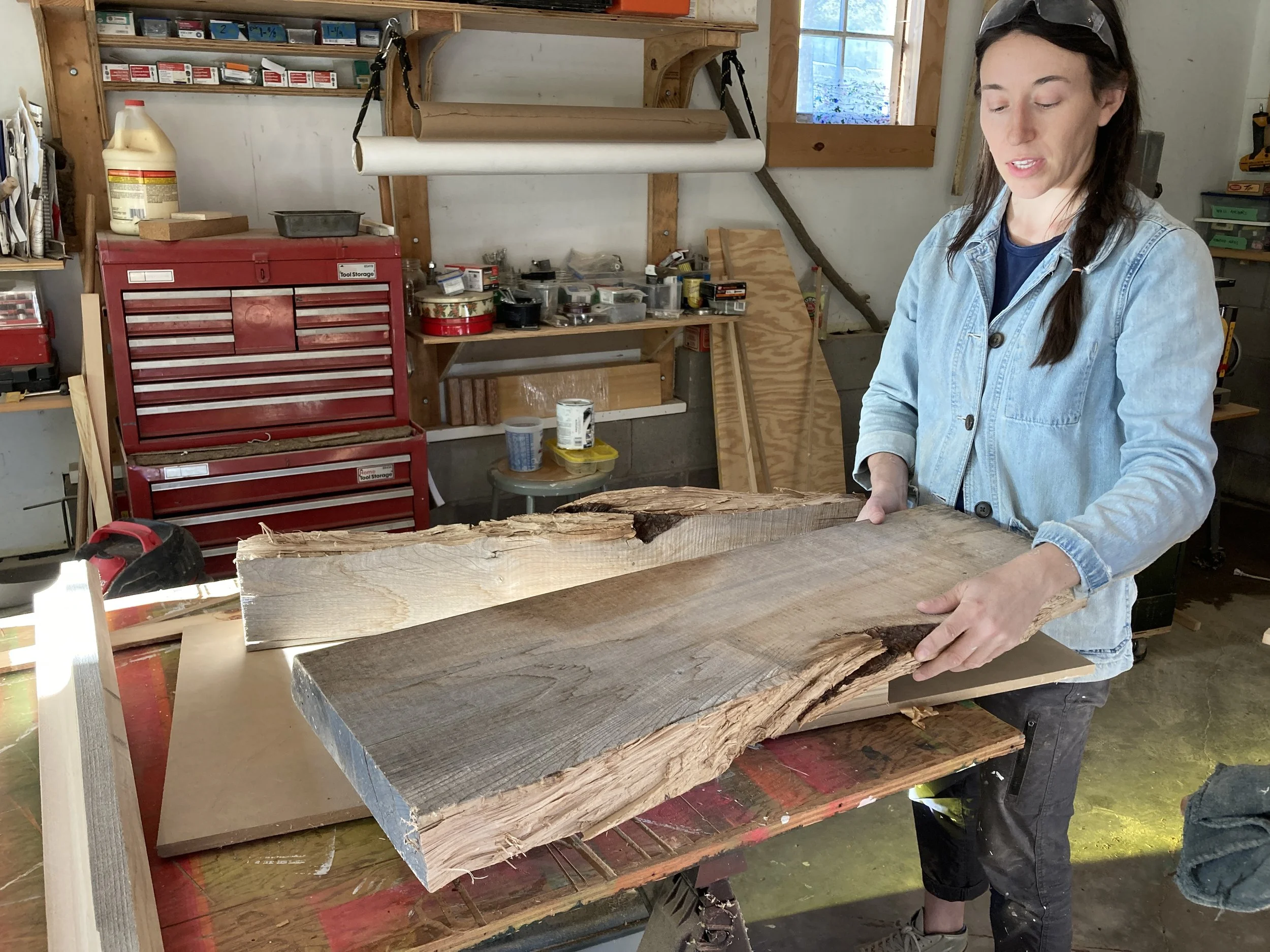
One of our repair locations involved matching new material to the existing historic millwork. This area was being repaired because it had been chewed into a generous opening to the attic by what looked to be a few generations of squirrels. Our repair involved careful measurement, material acquisition, and tooling, including making a cove cut on the table saw. It was great fun to match the scale and the depth of the cove in this wooden element.
From a historical preservation approach, we took on the task to match the color and the patterns that already existed on our building. In the end, it was our goal to make it appear as if there had been no intervention. The Iowa City Historic Preservation Commission has excellent resources, including this Historic Preservation Handbook, to help you navigate the constraints of historic preservation work, including directions for how to seek approval and apply for permits from the city to conduct historic repair work. Public Space One did its best to follow these guidelines and stay in close contact with members of the Historic Preservation Commission to receive guidance and ensure adherence to best practices.
Some resources that we’d like to share
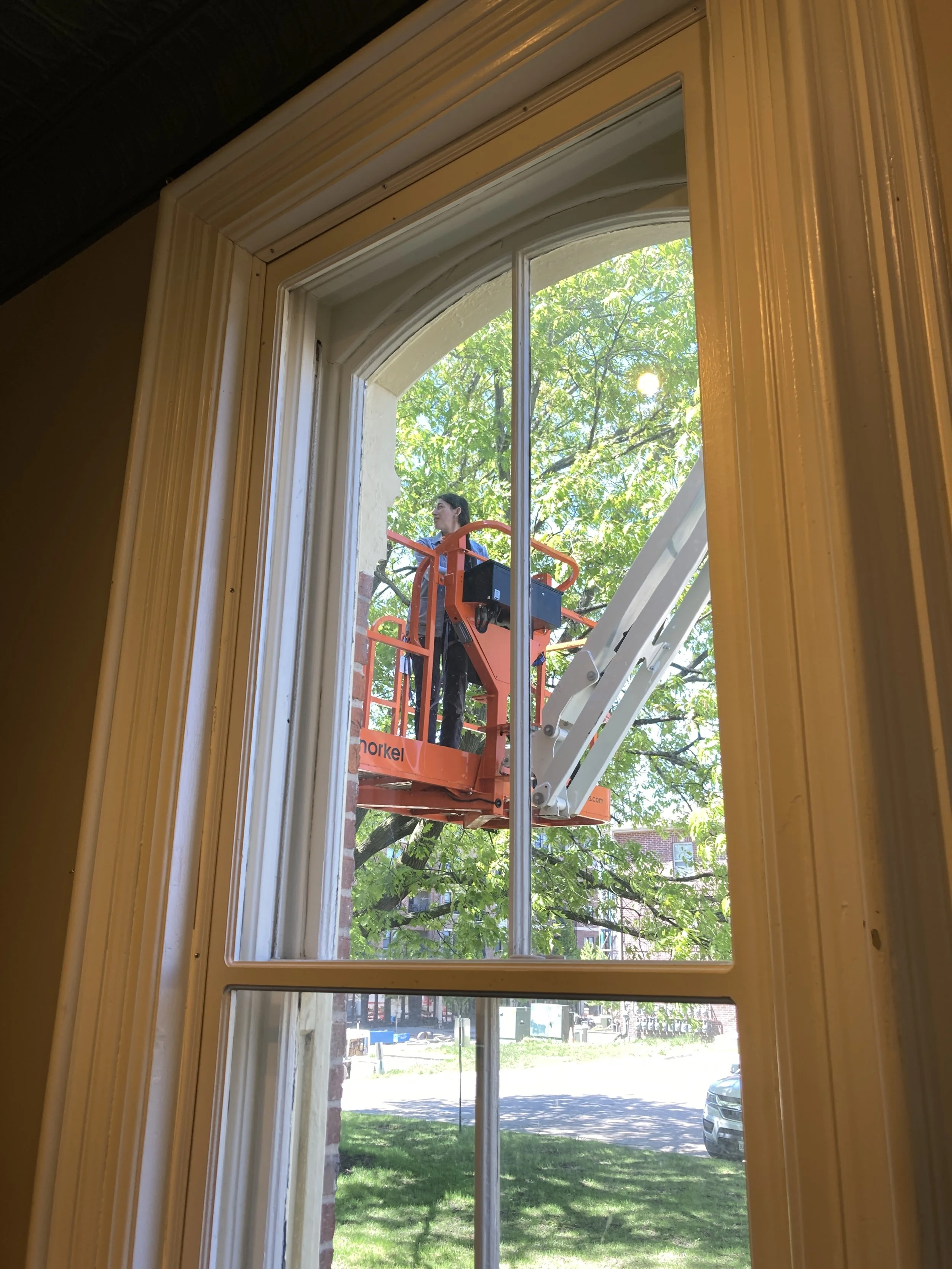
Because our building is so tall, we relied on the rental of scaffolding and articulated lifts to reach the eaves and repair areas on the 2nd and 3rd floors. Though some of our work could reasonable take place on a ladder, we strongly encourage using platforms and scaffolding for repair work. It is not only more stable, but it’s also easier to have your equipment by your side, and can save a lot of energy running up and down to retrieve parts and tools.
We also relied on the material resources at the Friends of Historic Preservation Salvage Barn for matching and salvaged lumber. This is an incredible local resource with a range of historic hardware, materials, and even a collection of tools and library materials that you can borrow.
And most importantly, this grant funding put us in touch with many expert community members who we would not have otherwise had the time and staffing resources to approach. Gathering and following advice has opened more ways for us to learn, whether In a one-on-one conversation about a building detail, unpacking the results of our site survey, coming together for a skill sharing workshop, or participating in a gathering of minds to brainstorm what is possible from a fundraising standpoint – all of this work is much more interesting and manageable with community support.
In the spirit of this community, we would once more like to thank the grant funders Historic Resources Development Program and the many folks who helped us to assess stages of this project including Shive Hattery, RDG Design, Kalona Gutters, Tomlinson Cannon, Catch’em Critters, Andino Construction, Jessica Bristow and the Historic Preservation Commission, The City of Iowa City, The Iowa City Public Library, Friends of Historic Preservation, the Salvage Barn, Ryan Prochaska, Rich Dana, Mike Haverkamp and Dan Brawner.
— Hannah Givler

