

Iowa Art Field showcases site-responsive installation art at alternative spaces in Iowa City.
Iowa Art Field is curated by Iowa City artist Nicholas Cladis and Japanese artist Sugimoto Hiroshi; both will also be contributing artworks to the program. Read more about this year’s featured artists below!
Visit Iowa Art Field October 30 - November 8, 2025 at three locations, from 10am to 3pm:
The Iowa City Park log cabins (Sugimoto Hiroshi, Jeremy Chen, Hannah Givler, Nicholas Cladis, Lydia Diemer)
The Johnson County Historic Poor Farm (Tony Orrico, Lydia Diemer, Bea Drysdale, John Engelbrecht, Paige Wilkinson, Savanah Bustillo, Matthew “Em” Garcia, Nicholas Cladis, Sugimoto Hiroshi)
Public Space One Close House (Paige Wilkinson, Lydia Diemer, Sugimoto Hiroshi)
Thursday, October 30: Opening tours of the installations, followed by drinks at PS1 Close House. Jump in and out at your leisure, at any time! Here are the times we’ll be at the sites:
12pm: City Park Log Cabins
2pm: Johnson County Historic Poor Farm
4pm: PS1 Close House
Saturday, November 1, 5-7pm: Reception and panel discussion with artists/curators at PS1 Close House
Sites


Artworks
CITY PARK LOG CABINS
-
Wrap
Paper is often used in wrapping. It naturally makes us curious about what lies inside. This time, I have wrapped stones from Iowa.
These stones have quietly existed in this land for ages, and now they have emerged into our busy modern world.
I wish for them to once again spend their time quietly, embraced by paper.
-
diffuse passage
handmade kozo paper, steel and wooden frame
from Hannah:
Nicholas and I made this piece together across our home studios in response to the phenomena inside of this particular dogtrot style log cabin (which also has resemblance to the southern saddle bag style[1]), both of which are prominent vernacular forms in the southern and eastern united states. Log cabin construction in general is striking to me because of its density and the scale of its framing. In comparison to more contemporary midwestern house forms whose insulated walls are covered with cladding, these logs are visible - you can kind of see how the building holds together, inside and out.Log cabins are seemingly simple in the way they meet the needs of providing basic shelter, while also iconically loaded as a symbol of the colonial migration of European settlers across this landscape between the 18 and 1900’s.
When we first walked into these two cabins I was struck by their symmetry and the mirroring of the windows. In an otherwise dense, fortified structure, these windows were areas that allowed passage of vision, light and air. With Nicholas and the paper form we were able to explore drawing attention to this moment of passage, exaggerating the volume of space between these permeable moments of the building in a way that would also respond to the movement of visitors inside, as well as the winds of our contemporary surroundings.
[1] Beard, D.C. “Shelters Shacks and Shanties,” with illustrations by the author, New York: Scribner 1914
from Nicholas:
The windows of this log cabin act as liminal spaces—a threshold between inside and outside realms. There is an inherent illusion here: we imagine the elements moving past beyond the walls while the interior stands still. Yet inside and outside are bound by light and volume.Handmade paper softens and diffuses the light throughout the day, creating shifting beams that trace moments of passage and illuminate different points along the assembled row. In this installation, Hannah and I approached light as a third collaborator—a presence within the space that changes over time, offers information, and seems to hover, linger, or pause. It makes visible the fluid boundary between structure and environment, reminding us that neither space is ever fixed.
-
Tributaries, Trade, Treaties, and Transgressions
Used bedsheets, glue, pine wood, pine plywood, birch plywood, screws, relief prints on handmade paper, battery operated LED lights, fishing line, sisal rope, steel links, brain tanned bison hide.
The installation is within a replica of the 1837 dogtrot cabin of the John Gilbert and American Fur Company trading post built by Old Settlers members and supporters in 1913.
--------------------------------------------------------------------------------------
When I encountered this specific cabin at City Park and its historical connections, I tried to fathom the tipping point where Iowa land changed from the diverse, pristine prairie (that sustained massive bison herds and indigenous ways to live on and care for the land) to the impacts of settlers staking “claim cabins” that rapidly transformed the deeply rooted sod to soil for agriculture and eventually became our current big agribusiness monoculture or monocropping. I began to imagine this cabin, and perhaps another like it, a few miles south of Iowa City in the 1820s and 1830s on the Iowa River where Snyder Creek empties into it. I started to imagine it conducting business there until the fur trade in Iowa essentially evaporated by 1839. Fashion swung from fur to silk. The American Fur Company declared bankruptcy in 1842 and was dissolved in 1847.
This cabin is a tangible sign marking how this extractive mentality led Iowa to lose 99 percent of its prairies and 75 percent of its forest lands within a relatively short 200-year period. From the 1803 Louisiana Purchase to present day agribusiness, Iowa, and those of us living in Iowa, extract more than we give back. Iowa’s current circumstances are not sustainable for the people, land, waters, air, and wildlife of Iowa. Working together, we can imagine and realize something better for Iowa.
As a young boy growing up in Iowa City, I always saw these cabins in City Park, but only faintly remember an elementary school field trip tour where I might have been told this cabin is a replica of an American Fur Company trading post originally located south of Iowa City where Snyder Creek enters the Iowa River.
This trading area was possible because a small tributary spills into a larger river which in turn conjoins with another river before all this water enters the Mississippi River. It was possible because the US Government allowed fur trapper and trader Stephen Sumner Phelps to establish a trading post in this area around 1830-1832.
Stephen Sumner Phelps (Wah-wash-e-ne-qua or “Hawkeye” in Algonquin language) was a fur trader and temporary resident of this area who traded with native peoples and built a trading post near the junction of Snyder Creek and the Iowa River.
This business was so lucrative that John Gilbert/John Prentice working with the American Fur Company established a full-service trading post around 1835. This replica cabin in City Park was modeled after that original trading post and was completed in 1913.
This type of trading post run by fur trappers and other early settlers began as places after first contact of White settlers with indigenous groups. This trading post was a site of exchange between Sauk and Meskwaki groups and White representatives of American Fur Company or independent traders.
This trading post likely sought to acquire furs from native groups that included beaver, fox, muskrat, mink, river otter, skunk, perhaps raccoon, as well as deer, elk, and bison hides. In exchange for these pelts, native groups might receive an item such as an axe, pots/pans, wool blanket, cotton clothing, musket, corn, flour, liquor, etc.
There was a global demand for furs, particularly beaver pelts, in China and Europe. Fashion and global trade drove the extraction of natural resources from this land we call Iowa. If we know history, even in this age of Amazon, the internet, and massive container ships, it really doesn’t seem too strange to contemplate a trapper, a canoe, a river, and eventually the Port of Canton (now Guangzhou) just as we consider the trade routes of the Silk Road.
Please feel free to sit or lie on the buffalo robe (bison hide) under the canoe form long enough to contemplate, if you can, a herd of five thousand bison roaming the prairies and plains. Consider the beaver, river otter, muskrat, and other creatures in their winter coats roaming the river valleys and streams. Or perhaps you can imagine their pelts piled high in this cabin and the smoky smells after the craft of brain tanning their hides. Reflect on the native canoe, a graceful, efficient yet humble and useful craft for carrying goods and people on the many waterways of the Mississippi River valley watershed and Missouri River valley watershed. Paddlers might bring goods to buy or sell and horses on the banks might pull heavily loaded boats against the current. You might imagine freshwater mussels nestled in muddy riverbeds but with clear water flowing above. You might think about the native species such as beaver, otter, deer, bison that were decimated by the fur trade. Iowa went from a state with plentiful deer to a state where deer were almost fully extirpated by 1900 and did not begin to recover until the 1960s. Now, Iowa City has a “deer problem” where urban deer feast without any predators to fear other than vehicles who only kill them by accident.
Please gather on this bison hide to think, to feel, to discuss. Alone, quietly in your own head, or in the company of and conversation with others, realize how our history brought us here. Now, where do we go?
NOTES:
The Sauk and Meskwaki of Iowa (WE ARE STILL HERE)
The American government officially named/names these peoples Sac and Fox, but my understanding is that the more accurate name is Sauk and Meskwaki. They are currently located in Iowa, Oklahoma, Kansas, Nebraska.
Other native groups that lived/live in Iowa or moved through these lands include the Ioway, Ho-Chunk, Potawatomi, Oto, Dakota. I am heartened to hear about individuals and groups giving LAND BACK to native groups such as the Ho-Chunk who have been largely pushed out of Iowa but are in Nebraska or Wisconsin.
I capitalize the “W” in White (as I would with the “B” in Black) to emphasize that this term is not only an abstract label, but an abstract concept constructed by White people and White supremacy and that it is not actually a useful or accurate descriptive adjective.
Recommended reading for context: The Emerald Horizon: The History of Nature in Iowa by Cornelia F. Mutel (University of Iowa Press, 2008)
HISTORICAL TIMELINE
Louisiana Purchase in 1803. Napoleon Bonaparte First Consul of France agreement with Special Envoy James Monroe on behalf of the President of U.S. Thomas Jefferson.
Lewis and Clark expedition commissioned 1803. In Iowa in 1804.
American Fur Company founded in 1808 by John Jacob Astor.
War of 1812. Most indigenous groups side with British against the Americans to protect their native lands.
1830 Indian Removal Act.
Blackhawk Purchase 1832. (President of U.S. is Andrew Jackson). Opens territory in what is now Iowa to non-Native peoples.
1867 Extirpation of mountain lions/cougars in Iowa
The last sighting of two wild bison in northwest Iowa (Spirit Lake) occurred in 1870.
Beavers and river otters were so decimated by trapping and the fur trade that their populations only began to recover in the mid 20th century.
1871 Last elk sighting in Iowa
1872 Beaver trapping closed by Iowa legislature. Not reopened until 1949.
1876 Last black bear sighting in Iowa.
1884-1885 last reported sighting of a gray wolf in Iowa.
The 1898 Iowa deer hunting season was closed due to near extirpation of wild deer in Iowa. Corn farming and urban and suburban development seem to have led to a robust return of deer to Iowa.
SITE ACKNOWLEDGEMENT
We inhabit systems and structures. Sometimes we inherit these, sometimes we consciously or unconsciously construct and maintain them. We take it for granted that Iowa City exists where it does and has the right to be here. I take it for granted I can buy a house and consider it my private property. It seems impossible to deny that settler-colonialism and White supremacy have histories that are not over. Instead, they are practiced and reinforced by systems we are all embedded in no matter what our backgrounds are. Our actions to resist and dismantle these harmful legacies are important if we truly want all people to live in a more just and inclusive world.
I want to acknowledge the land this cabin rests on was forcibly taken from peoples, including some who had been pushed off other lands before that. Many groups lived with this land for perhaps 14,000 years in a sustainable way. Since that forced takeover, the land and indigenous peoples that were here have endured many scars and traumas but have persisted in sustaining their indigenous culture.
From recent history and current times, we know part of the story of one of these resilient groups, the Meskwaki Nation. Their current settlement is only 78 miles from Iowa City, but their traditional lands also included lands along the Iowa River near and its tributaries near current day Iowa City. They traded with Stephen Sumner Phelps and John Gilbert and their regional associates of the American Fur Company or independent merchants. Contact between traders, trappers and the native leaders such as Chief Poweshiek (Meskwaki), Chief Keokuk (Sauk), and Chief Blackhawk (Sauk), Peosta (Meskwaki), Chief Wapello (Meskwaki), Chief Appanoose (Meskwaki) and their peoples benefitted both groups in specific ways but was ultimately destructive for the Meskwaki and Sauk peoples way of life and ability to live on the land called Iowa.
Meskwaki have Algonquin origins on eastern woodlands in Quebec and Ontario. For various reasons they needed to migrate west. The Meskwaki historically inhabited Michigan, Wisconsin, Illinois, Missouri, and Iowa and were intertwined with the Sauk peoples. The Meskwaki kept being forced off their lands by settlers, pioneers, and U.S. government armies. Their sustainable ways of life were disrupted. Part of the story of this cabin is the history of how rivers and tributaries allowed trappers and traders to encounter native peoples and to learn from them. It also is the story of local trade and exchange (often unfair) during a time of disruption to historically sustainable ways of life that was intertwined with global trade. Bartered goods included furs such as a single beaver pelt that could be traded for an axe head. But then that single fur could fetch the equivalent of 30 axe heads in the global market.
Despite destructive White supremacist actions including forcible removal to a reservation in Kansas, the Meskwaki peoples survived and persevered. In 1857, they purchased 80 acres of land along the Iowa River and now own more than 8,000 acres. For context, there are several individual farmers and farm corporations in Iowa who own 10,000-acre farms. Individual farmland owner Kent Kiburz owns 47,300 acres of land. Robert Van Diest and the Van Diest family own 34,500 acres.
This Meskwaki settlement is not a reservation. The Meskwaki are a sovereign nation located about 50 kilometers (30 miles) from Grinnell College. They value their privacy and independence but there are events and relationships where non-Meskwaki peoples are invited to the settlement. The public is welcomed to a four day, multiple First Nations powwow held on settlement land each August; I encourage you to go sometime. When considering the history of what outsiders have done to the Meskwaki, I am amazed that I and others are welcomed to this event. I have learned so much from attending this and other powwows and hope to continue to grow healthy relationships with native peoples that work toward healing and reconciliation.
Much of what I share about the Meskwaki (and more) can be found at https://meskwaki.org/about-us/history/
I call each of you to continually reflect on every one of the locations you inhabit now and throughout life as places with rich history, and to realize how the land’s use has impacted the indigenous cultures of past and present or people who have been marginalized. I call on you to interrogate how your place, the patterns of land use, and the political, economic, social, and cultural structures still impact the lives of all peoples living there from various groups. This is very relevant to how we live our lives as artists who use energy, materials, generate waste, and interact with people. I ask us all to continually reflect on the ethics and aesthetics of our actions as artists (cultural producers) and as humans and implement constructive actions that work toward the healing and repair that seek liberty and justice for all.
-
Footage for Lydia Diemer’s work my heart is swimmed in time was gathered at this site. Visit it at PS1 Close House!
JOHNSON COUNTY HISTORIC POOR FARM
-
Textile: ERASURE IS MARK MAKING, 2025.
passing light 1-6
handmade abaca paper, graphite, performanceMy works for the asylum respond to the site’s layered history through drawing and process. The exhibition presents new works on paper adapted from previous series. Textile: ERASURE IS MARK MAKING acts as a mental loom, connecting observations and reflections from my time drawing in the space. It considers thought as movement, and collective memory as both permanence and deviation.
The passing light (1–6) series comprises performed processes created over several visits, in dialogue with the architecture and its enduring atmosphere. Each drawing attempts to capture the shifting presence of light as a witnessing and connective force across time and people. One hand draws as the other erases—both gestures leaving a trace. Together, these works echo the site’s quiet persistence, honoring its rhythms of labor, solitude, and continuity.
The handmade paper for these works was made in collaboration with Nicholas Cladis.
-
my heart is swimmed in time
[Johnson County Historic Poor Farm Asylum, west cell]
site-specific installation: drawing on handmade and found paper (kozo, mulberry, BFK rives, Tyvek), red onion, madder root, and red cabbage dyes, graphite, sumi ink, gouache, shifu, hemp thread, handmade bamboo clothespins, paper weight, two stones, dimensions variable, 2025[Johnson County Historic Poor Farm Asylum, east cell]
site-specific installation: seven drawings on BFK Rives, avocado dye, wooden platform, dimensions variable, 2025There is a table. I am seated, maybe hovering. I am a locus of small events, repeated actions, all concepts contingent, unfolding. The tabletop is even, stable and continuously alterable. It is a place where I am surrounded by glimmers and shadows of paper essays, my tactile attempts. The room itself contains and shelters. Included are my first sights, remnants of all the houses I’ve ever lived in, dreamed of, or escaped. These live beside reams of drawn dots, piles of constructions, found scraps, pieces of a practice. Light arranges itself, shifts, fetching darkness, stacking near formless replicas, the enduring connections of then and now.
my heart is swimmed in time responds to three public geographies, paying particular attention to the continuity of impermanence and the dialectics of holding and liberation. The work pivots on simultaneity; of losing and loving, carrying and abiding, saturating. A way of moving through and negotiating the world, measuring, drawing, marking time, clinging, and discarding. Given the historical precedents, the present reversals, and future potentialities of political and social dispossession, each site becomes a record and a projection, a space to imagine and make visible the humanity of marginalized and pathologized populations. To seek justice in care and through community.
-
[far end stall]
Earth Segment
Tissue paper, glue stick (Bea Drysdale) / Handmade paper (Nicholas Cladis)Flounces are most often used for flirty, decorative flourishes on women’s clothing. I am using the flounce for its architectural and structural qualities.
Three circles of tissue paper with a radius of 54 inches are cut open along a single line to the centervpoint where a second circle of 3.8-inch radius is cut out. These inner circles are straightened out in a linevand joined together to make a 72-inch-long flounce.
Perhaps this flounce represents geological layers beneath the earth’s surface, a surface which is represented by the handmade paper?
A centered location in the stall catches the light from the window, allowing for careful attention to the details in the handmade paper, including craters formed by falling dew in Nick’s back yard. The imagination can roam from the small to the monumental.
[middle stall]
Sluice
Tissue paper, kraft paper, glue stickThe pleats fall open, a gesture of release that has physical and emotional resonances in the body. Light shining through the folds creates a pleasing tonal pattern when viewed from the milking stall side of the barn. Three instances of this event draws attention to slight variations in each result.
-
Beast Mode / Light Flow (4 bound books), Normalizing (takeaway zine)
laser toner printsDrawing from a two decade plus archive of B&W photographs under the title Memory Into Mythology, these images were compiled and sequenced in response to this particular time and place.
The four books that make up Beast Mode / Light Flow take animal (de)liberation as their broad stepping off point, with the JCPF’s Dairy Barn seen as prompt for humans’ relationship to the rest of the animal kingdom: a source of curious inspiration and annihilating guilt.
Normalizing, the accompanying staple-bound takeaway zine (yes, feel free to take a copy), rifts on the time (the political “In These Times” time), that sees humans “losing their head” over the empty symbols of the final sinister and callous stages of our crumbling empire.
Both pieces float in and out of dialogue with each other (some images repeat), tied together through the compositional and technical constraints of the Memory Into Mythology archive, where seeing and reading affectively interplay.
-
Droplet Marks
When it begins to rain, the sound of droplets falling from somewhere catches my attention. When I dip the mimi (deckled edge) of washi paper into ink and then dry it, I can also hear the sound of droplets falling. Yet because the ink is viscous, the droplets fall at a tempo slower than a ballad—reluctantly, as if they resist falling.
It feels as though those droplets contain a desire not to fall. Still, unable to resist the pull of gravity, they finally drop onto the plain surface of the washi paper.
Upon impact, they scatter tiny splashes around them, leaving behind the trace of a single droplet. I have contemplated the relationship between the droplet’s trace and the washi that receives it.
Washi
From the strength and beauty inherent in washi (Japanese paper), and from the forms shaped by its materials, I wish to sense a world that transcends conscious awareness. Works of this series (with embedded paper mulberry fibers) are at both the cabin and the dairy barn building.
The works in the dairy barn were made at Nicholas Cladis’ home studio when I arrived to Iowa, so they capture my first impression of the land – crisp autumn days, sunny time making art, and being in good company.
-
Shifting Light in the Corn Crib
Handmade paper from harvested sunflower, corn, and daylily; butterfly pea flower emulsion anthotype printing; handmade translucent abaca paperShifting Light in the Corn Crib explores memory and place through anthotype printing—a process creating soft, ephemeral images using natural dyes on handmade paper from harvested fibers of sunflower, corn, and daylily. I gather shadows cast by the architecture and landscape of the Johnson County Historic Poor Farm, creating meditative works that honor the witness marks left by past inhabitants and the memories held within these sites.
Anthotypes reflect how memory functions: revealed by light, exposed over time, and eventually fading, yet leaving meaningful traces. In the corn crib, light filtering through wooden slats marks both the installation and the floor throughout the duration of the work, exposing the light’s revelatory and destructive nature. Contemplative text printed on transparent abaca floats in front of the light transmitted between the wooden slats, becoming a translucent veil through which light passes. The shifting daylight patterns from eastern sunrise to western sunset create another canvas for exploring how spaces hold and release their stories with shifting light, as the work transforms between raking and transparent light.
Using natural dyes from locally harvested fibers grounds this work like a tether. The site has transformed over time into a space of healing and nourishing the community. Like the site and the land, my anthotype prints embrace impermanence: once overexposed, the substrate remains available for new work, continuing cycles of memory and transformation.
-
I wade through the stalks (A ballad of the second generation)
Installation of three 34 x 54 inch sheets and one 30 x 40 inch sheet — Handmade watermarked cotton and abaca paper, dried corn husks, thread
I have always known that words have stakes.
It was a sour lesson. Spreading slowly on the palate. Pulling at my nostrils when my grandpa, Yayo, would ask me whether the word in or on was more appropriate for the bank teller. Pricking my tongue when my second grade teacher was unable to get the J of my father’s name right at parent-teacher conferences. There was a symmetry to its notes of caustic bitterness. My relatives would struggle to pronounce the a’s of my American first name, just as each of my grade school teachers struggled with the double l’s of my Colombian last name.
These flavors still linger in my mouth.
The watermark sits between the seen and unseen. It is proof of labor and ownership, of family secrets and the lineages of masters, apprentices, and guilds. They are embedded; a part of the body of the sheet. An internal structural component that is formed from the displacement of pulp.
Displacement.
As I weave my body through this corn field, I am hyper alert. I am not from here. The corn field is not where I grew up, nor where my family comes from. It wears on me as I struggle through it, leaving its own traces. The corn field is a special place of bounty, where some types of animals thrive. I am lucky to be here and I keep track of each cut.
-
Planar Fall/Chest
Tissue paper, glue stickThis piece has a frontal plane, or sheet, that carries within it an additional plane – the plane created by the bases of the inset boxes. These two planes are doubled by hanging the piece over the beam, creating four planes. Choosing a mid-tone color paper gives the most chance for the color to appear to gather, accumulate, and reverberate through the layers.
Our chest is a frontal plane as we go out into the world.
-
To become tractable
Installation of three 34 x 54 inch sheets — Handmade watermarked cotton and abaca paper, milk paint
To become tractable is to become sanded down and smooth. Pliable. Flexible.
To minimize friction and resistance. Domesticated.
I am at war with myself, suppressing my spite, swallowing back down a fury.
What I want is to have the power to be above all this - “this” is the reminder that I am not the sort of person who is typically granted power.
-
Procession for Earth and Space
from Em:
This is a moment of stillness, a place for meditation on space, time, and scale. The pools acting as portals to distance realms, mirroring the vastness of the universe, while the rocks shift the scale grounding the piece, creating a connection to the terrestrial. A play between land and sky, Earth and cosmos, the beginning of time and the present moment. Each pool invites reflection, offering a quiet shift in perception and a moment of contemplation.
from Nicholas:
“Deep time” is a phrase we hear often, yet it remains abstract—difficult to connect with the scale of everyday life. Presenting this work in a historic granary offers a moment to reflect on the formation of Iowa’s fertile basins and how geological time has shaped the region’s history, heritage, and society.
This installation invites viewers to contemplate that continuum between past and present. At its center is a symbol of deep time itself: the stone—tangible, enduring, and a silent record of the Earth’s transformations.
Here, however, the stones are made by hand from paper pulped with plants grown in Iowa, merging what is found with what is made. This gesture blurs the boundary between natural process and human craft, echoing the entanglement of geology, ecology, and culture that defines our place in time.
media: Paper handmade by the artist (kozo, mitsumata, willow, cattail, goldenrod, hemp, milkweed, flax, corn), sumi, acrylic, hackberry, pine, water
PS1 CLOSE HOUSE
-
Stairways and Railings of Johnson County
Handmade paper from harvested sunflower and flax, butterfly pea flower emulsion anthotype printing
Gathered shadows of staircases and railings throughout Johnson County.
-
my heart is swimmed in time
[Close House East Room]
Site-specific installation: digital video with audio (11 min, 59 sec), drawing on found paper and handmade kozo, gesso, sumi ink, bookcloth, photocopies on board, nori paste, set of drawers, found stools, 2025
(Footage and materials used in this video were also gathered at the City Park cabins and pool construction site.)
There is a table. I am seated, maybe hovering. I am a locus of small events, repeated actions, all concepts contingent, unfolding. The tabletop is even, stable and continuously alterable. It is a place where I am surrounded by glimmers and shadows of paper essays, my tactile attempts. The room itself contains and shelters. Included are my first sights, remnants of all the houses I’ve ever lived in, dreamed of, or escaped. These live beside reams of drawn dots, piles of constructions, found scraps, pieces of a practice. Light arranges itself, shifts, fetching darkness, stacking near formless replicas, the enduring connections of then and now.
my heart is swimmed in time responds to three public geographies, paying particular attention to the continuity of impermanence and the dialectics of holding and liberation. The work pivots on simultaneity; of losing and loving, carrying and abiding, saturating. A way of moving through and negotiating the world, measuring, drawing, marking time, clinging, and discarding. Given the historical precedents, the present reversals, and future potentialities of political and social dispossession, each site becomes a record and a projection, a space to imagine and make visible the humanity of marginalized and pathologized populations. To seek justice in care and through community.
-
“K” Series
Handmade paper, crafted by artisans, is generally expected to have consistency as a product. I come from a papermaking village, but I am not a papermaker; so, I use the detritus from paper mills in my work. In this case, I am using the cut-off deckled edge. One could say that the paper’s individuality appears solely in its mimi (deckle edge). In that edge, I feel as though the spirit of the divine unconsciously resides within the paper made by the artisan’s hands. That individuality is expressed through its thickness, waviness, and texture—no two edges are ever the same.
Another element that brings out this individuality is ink. The ink reveals different expressions corresponding to each unique edge. Within this interaction, there is both tension and harmony between the mimi and the ink. By arranging each sheet side by side, I find joy in deepening my connection with the spirit that dwells within the paper.
2025 Featured Artists

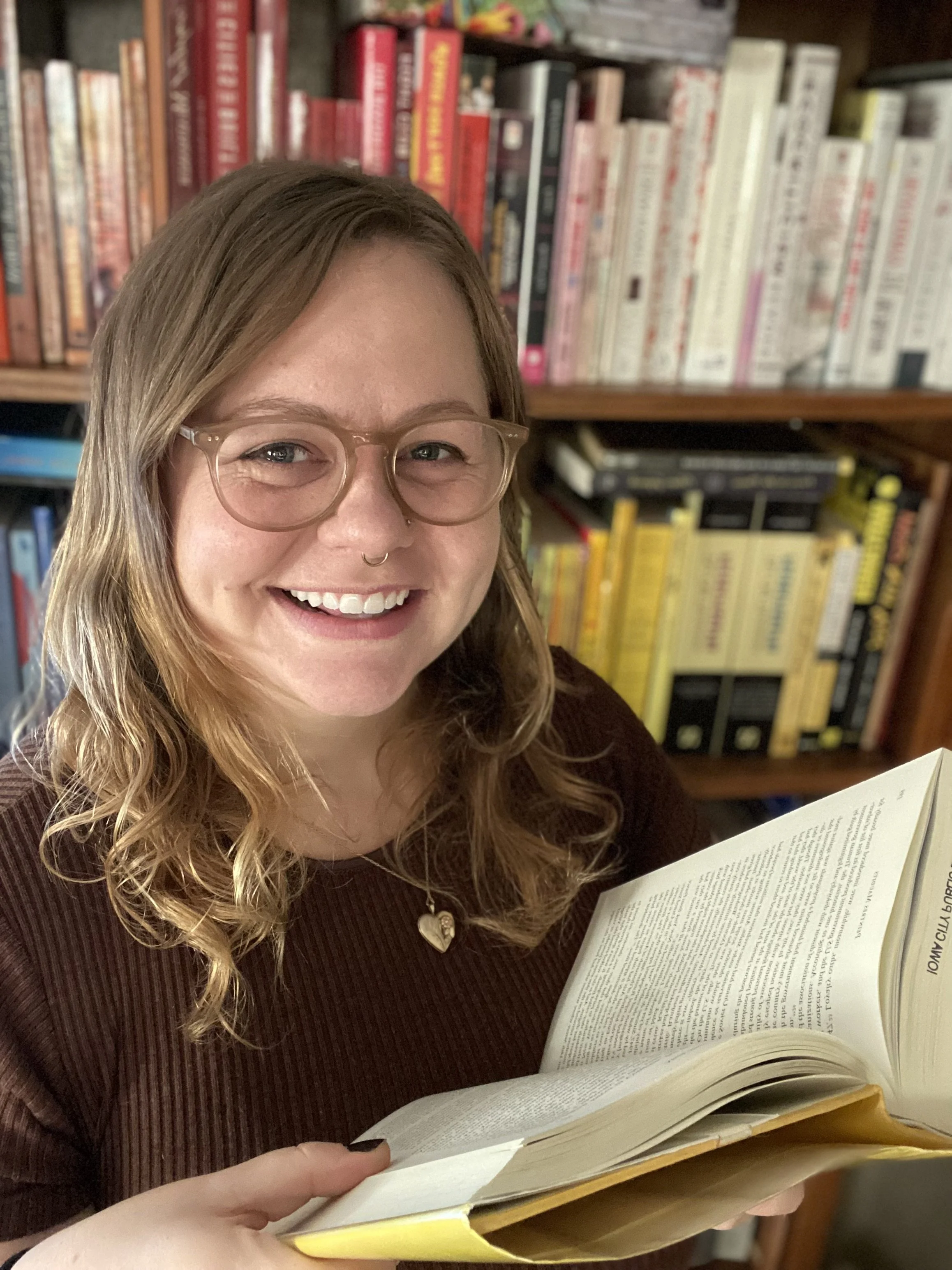
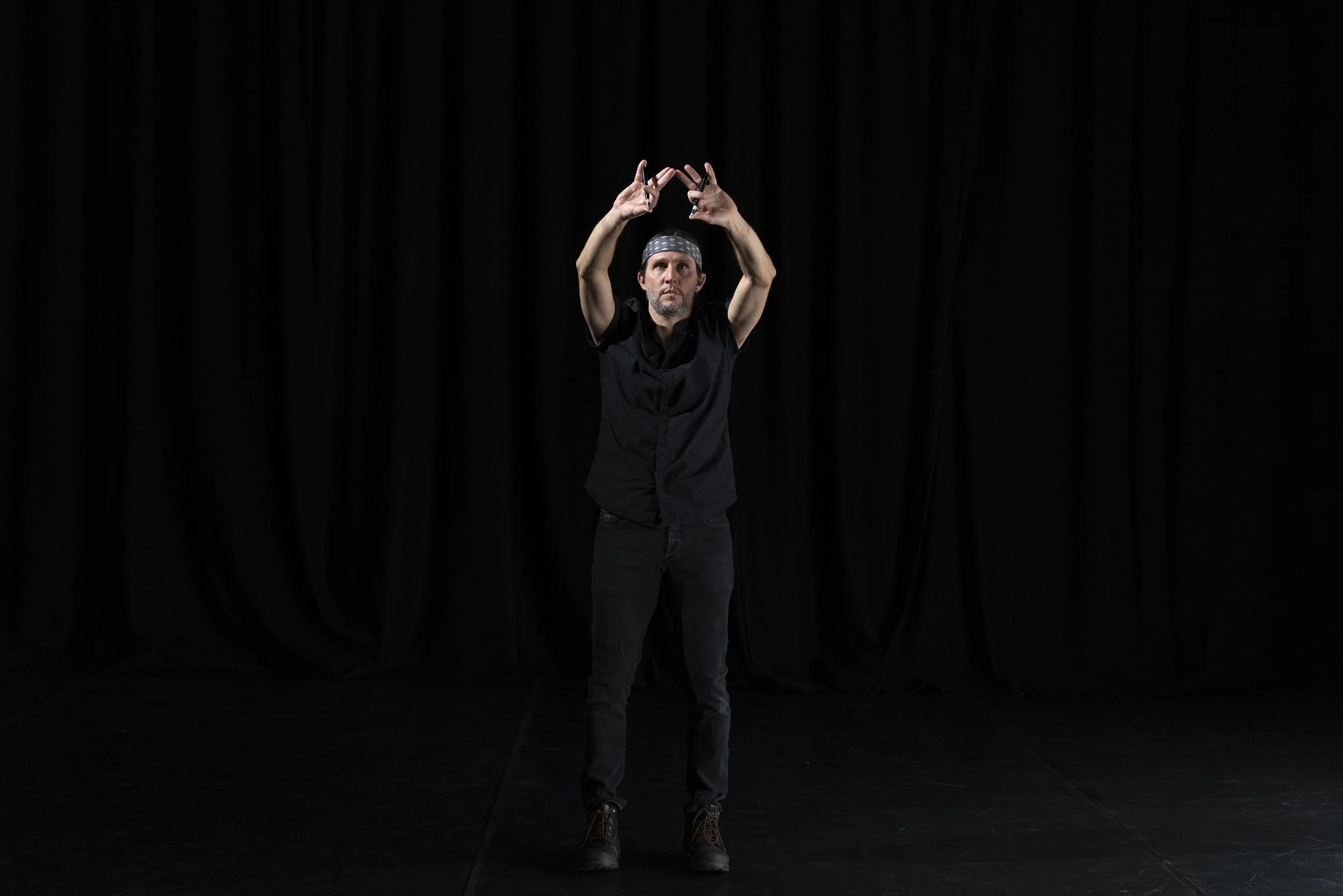


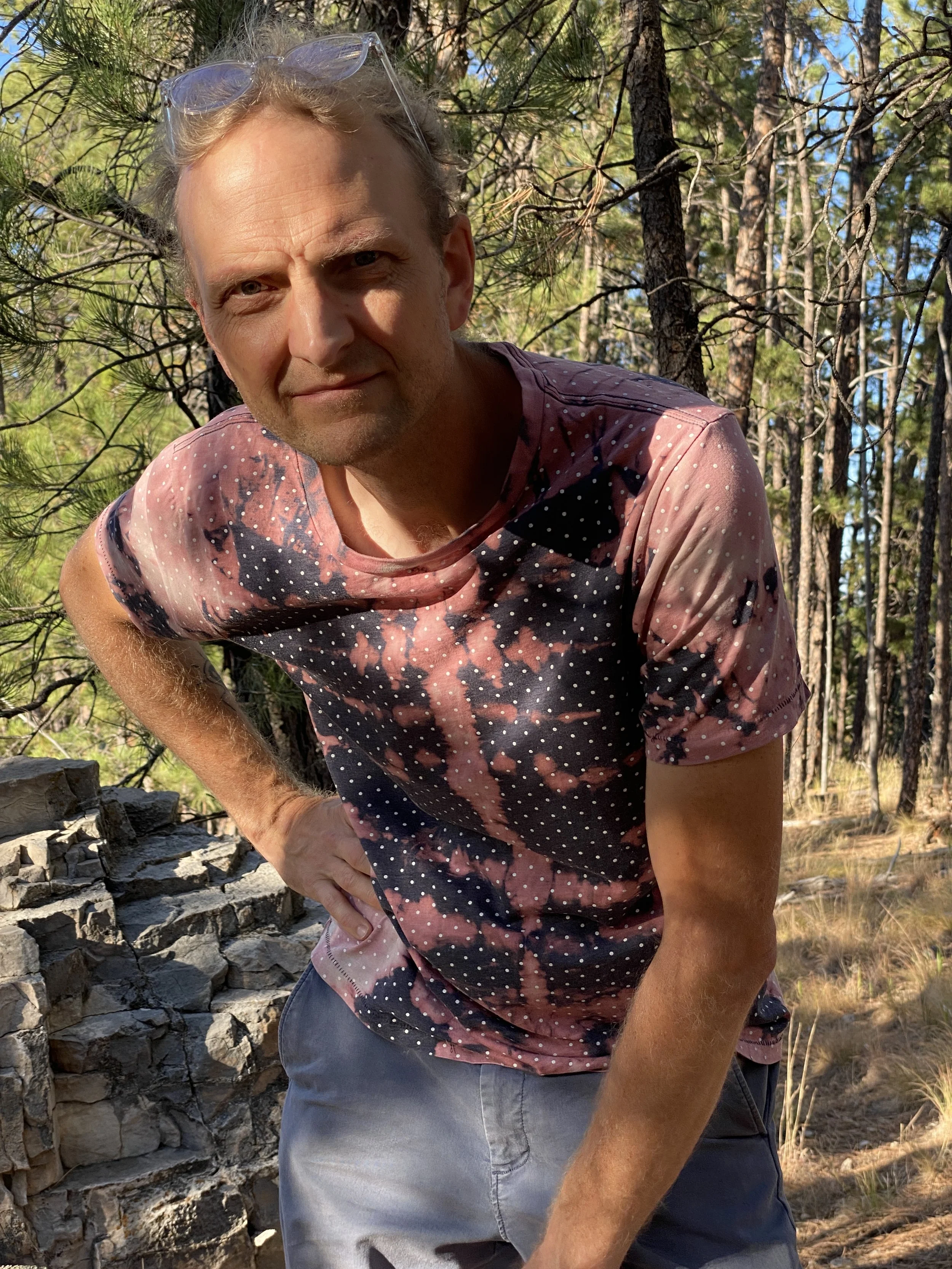


Artist-Curators
Iowa Art Field founder/director Nicholas Cladis’ site-responsive installation practice gravitates towards non-traditional exhibition venues that have the ability to highlight human and environmental ecology. Art in this context is meant to be enjoyed by the public in relation to architecture, history, and culture, among others. In its most basic form, an installation is meant to bring people together. To experience an installation is not only to view it, but also to travel and witness. Iowa Art Field invites our visitors to likewise engage with Iowa City landmarks.
Sugimoto Hiroshi was one of the founding artists of Imadate Art Field in 1979. Sugimoto’s work won accolades from guest curator Lee Ufan throughout the 1980s and 90s iterations of the exhibition. In the early 2000s, Sugimoto took a hiatus from his practice to work as a caretaker for people with disabilities. He re-emerged in 2020 and has been actively producing new artwork since. He held a solo exhibition of new work at the Udatsu Paper & Craft Museum in Japan in 2023. Sugimoto recently opened a new gallery space committed to handmade paper art.
More Info
During Cladis’ life in Echizen, Japan — a region with over 1,500 years of papermaking history — he was a contributing artist and committee member of Imadate Art Field, a non-profit arts organization there (and the inspiration behind our name!). Cladis worked to restore historic structures, turning them into alternative exhibition spaces for installation art. Upon arrival to Iowa, Cladis was struck by the specific usage and appearance of the Midwestern landscape, ranging from agricultural detritus to pristine barns.
Like Echizen, Iowa City is a community of thoughtful makers and creatives. Iowa Art Field seeks to highlight Iowa City’s remarkable structures and locations — not only for their aesthetic properties, but also their conceptual implications and ability to operate as spiritual and artistic lodestones. The installations for Iowa Art Field are conversations as much as they are works of art, and we hope by re-homing art to these spaces that we can bring connection and creative expression to one another.
In 2024, Public Space One hosted a comprehensive reading room of Imadate Art Field’s history. Read more here.
Thank You
IAF is hosted by Public Space One and made possible with support from the City of Iowa City Public Art Matching Grant.
IAF would not be possible without our wonderful Iowa City and Johnson County collaborators! A big thanks you to Julie Watkins and Ilsa DeWald at Johnson County Historic Poor Farm, and Juli Seydell Johnson, Brad Barker, Tyler Baird, and the entire staff of Iowa City Parks & Recreation.


